Friday, August 07, 2015

Review: The Ravens by Vidar Sundstol tr. Tiina Nunnally

The Ravens by Vidar Sundstol translated by Tiina Nunnally, April 2015, 272 pages, University of Minnesota Press, ISBN: 081668944X

Reviewed by Laura Root.
(Read more of Laura's reviews for Euro Crime here.)

THE RAVENS by Vidar Sundstol (translated by Tiina Nunnally) is the closing instalment in the Minnesota trilogy featuring unlikely hero Lance Hansen, plodding US Forestry service cop. This sequence of books is set amongst the small lakeside towns of the Norwegian-American diaspora. First book in the series is THE LAND OF DREAMS, in which Lance had a tangential role in a murder investigation, after he found the body of Georg Loftus, a Swedish tourist who had been brutally killed at Baraga's Cross. The second book in the trilogy, ONLY THE DEAD was very different in feel. Instead of focussing on Lance's interactions amongst the small-town Norwegian-American and Ojibwe communities, the main action of ONLY THE DEAD revolved around a grim wintry hunting expedition by Lance and his brother. This book was tense and claustrophobic, as it was unclear who was the prey. THE RAVENS proves to be different yet again from the preceding books.

At the start of THE RAVENS, Lance has run away from his troubles and is hiding out at a small town just over the Canadian border. He has lied to his family and colleagues by telling them that he has decided to take a holiday to Norway to visit his ancestral roots. Eventually Lance gives up this ridiculous charade and returns to his home-town, forcing himself to confront his fears about his brother Andy. Lance is afraid of his brother. He is convinced that Andy was involved in the murder at Baraga's Cross, and is tormented by the dilemma of whether or not to speaks up about his suspicions. He is particularly troubled as if he stays silent an innocent man, Lenny Diver, who is currently on remand for the crime, may end up serving a long prison sentence.

Lance forces himself out of his comfort zone and ineptly delves into the past in his attempts to uncover what exactly happened at Baraga's Cross. He tracks down Clayton Miller, victim of an assault by Andy as a teenager, to find out more about what makes Andy tick. He tries to rebuild connections with family and friends in his quest for information, as he fights the anguish in his head and the lure of the snowy lake, driving himself to the brink of his sanity. His improving relationships with his niece, teenage Goth rebel Chrissy and with his ex, Debbie Ahonen, help provide some stability for Lance at this difficult time.

THE RAVENS is an intriguing finale to an unusual trilogy. As with previous books in the series, the focus is more on the landscape and people of the borderland communities, and the turmoil in Lance's mind, than on action and thrills. THE RAVENS did feel a little slow at times, and Lance's failure to simply ask direct questions of his brother can be a little frustrating. But Lance's reticence is just about credible as being in keeping with Lance's emotionally inarticulate nature. The themes of dreaming and of Lance being haunted by the spirit of Swamper Caribou are interestingly developed in this book and play a part in Lance's eventually uncovering of the truth about the murder. The ultimate resolution of the crime ties up the loose ends more or less satisfactorily, managing a reasonably thrilling twist in the tale. THE RAVENS would be readable as a standalone, but the reader would get more out of having read at least THE LAND OF DREAMS beforehand.

Laura Root, August 2015

Thursday, August 06, 2015

Review: The Man Who Watched Women by Hjorth & Rosenfeldt tr. Marlaine Delargy

The Man Who Watched Women by Hjorth & Rosenfeldt translated by Marlaine Delargy, June 2015, 528 pages, Century, ISBN: 1780894554

Reviewed by Geoff Jones.
(Read more of Geoff's reviews for Euro Crime here.)

Stockholm, Sweden. The Riksmord is the national based homicide squad and their leader is Torkel Hoglund. Reporting to him are Ursula Andersson (a forensic expert who is married but having an affair with Torkel), Vanja Lithner and Billy Rosen.

There have been three brutal murders in the city. Women dressed in a particular nightdress with their hands and feet bound. They have been raped and have had their throats cut. The way the murders have been executed is reminiscent of a serial killer named Edward Hinde. But Hinde has been in the Lovhaga prison for fourteen years.

The man who helped put Hinde behind bars is Sebastian Bergman. A psychologist and profiler he has written books about Hinde. However life is getting difficult for Bergman. He lost his wife and daughter in a Tsunami and has never fully recovered. He has a history of seducing women and has lost count of his conquests. Amongst these is the mother of Vanja Lithner, although she has no idea Sebastian is her father, and hates the man.

With the Press making life difficult, Torkel and his team must find the connection between a copycat and the original serial killer. Sebastian wants to interview Hinde but Vanja feels she should be the one. Feelings are running high, as Billy the fourth member of the team feels he should play a more prominent role. Whilst the “office politics” are played out another murder is about to happen. Is Hinde involved and if so how? Can Sebastian recreate his best achievements and help the Riksmord team to solve who is the killer?

The authors are famous in Sweden for TV and film writing and they have written a few Sebastian Bergman books, but this is only the second published in the UK. A TV series based on the character was shown on BBC Four. This is a well written exciting story; the pace is fast but actually speeds up near the end which leaves you holding your breath as events unfold. I’ll be definitely reading more about Sebastian and highly recommend this book.

Geoff Jones, August 2015

Wednesday, August 05, 2015

Review: Buried by Jussi Adler-Olsen tr. Martin Aitken

Buried by Jussi Adler-Olsen tr. Martin Aitken, February 2015, 592 pages, Penguin, ISBN: 1405909803

Reviewed by Michelle Peckham.
(Read more of Michelle's reviews for Euro Crime here.)

The long pre-amble to this book, builds up the background to the eventual crimes that Department Q is tasked with investigating. As part of a money laundering swindle, René Eriksen, a government official, is sending money to Africa, to help his friend Teis Snap, the head of Karrebæk Bank to prevent the bank from going under. Somehow, this is linked, at least in part with the local work of Louis Fon, who was working with the Baka pygmy tribe to protect their way of life in the Bantu region in Africa, but he is brutally murdered by Mbomo when he discovers that the money that should have been used to help them was actually being used to buy alcohol and drugs. As he lies dying, he manages to send a cryptic text from his mobile phone, which is received by William Stark, who works for René. William is sent out to investigate Fon’s disappearance, but while there, helped by Swedish man in a bar, he manages to decipher the text, which hints at the scandal. Stark immediately and unexpectedly returns to Denmark, but this was a dangerous move, and he hasn’t banked on the ruthlessness of Teis Snap, who engineers William’s disappearance.

Marco is a young, bright lad, who in a rather Dickensian way, works in a gang of children made up of pick-pocketers and beggars, which is controlled by his uncle Zola. He’s never been allowed to go to school, and the gang have travelled around Europe before ending up in Denmark, but he’s managed to teach himself quite a bit by reading books, and is one of the few in the gang that has managed to learn to speak Danish fairly well. Zola is a bully, and beats the children who don’t perform well on the streets. One night Marco overhears Zola planning to maim him, so that he can be an effective beggar and he decides to try to escape. And in doing so, he stumbles across Stark’s body.

Department Q, is made up of DI Carl Mørck, a Muslim sidekick called Assad, and they are supported by Rose, a strong, opinionated and difficult woman who nevertheless is extremely good at her job. Mørck is divorced from his wife Vigga, dating his psychologist Mona, and living in his house is Hardy, an ex-cop who is now a paraplegic, a lodger called Morten and his boyfriend Mika, and his difficult teenage son Jesper. Department Q is tasked with tackling unsolved cases, and eventually they almost stumble onto the case of the missing William Stark. Then, the plot follows the parallel stories of Marco, trying to keep hidden from Zola and his gang, as well as the police, with his knowledge of the fate of Stark that will eventually become important, alongside the investigations of Department Q.

The sarcasm, back-biting and apparent dysfunctionality of all three members of Department Q make for entertaining reading, though in reality they make a very good team, with complementary strengths that work well together to solve the crimes under investigation. And the desperate plight of Marco, and how he seems to have as many lives as a cat, as he escapes capture and harm, time and time again through his wits and intelligence, is well told and engaging. The Department Q stories are complex, well written, and never fail to disappoint, and this one is no exception. I thoroughly enjoyed it, and if you haven’t read these novels yet, it’s about time you did!

Michelle Peckham, August 2015

Tuesday, August 04, 2015

Review: The Hummingbird by Kati Hiekkapelto tr. David Hackston

The Hummingbird by Kati Hiekkapelto translated by David Hackston, September 2014, 350 pages, Arcadia Books, ISBN: 1909807567

Reviewed by Ewa Sherman.

THE HUMMINGBIRD, voted the best Finnish crime novel of 2014, was shortlisted for the prestigious Petrona Award for translated Scandinavian crime fiction. It’s only the second Finnish crime fiction book that I’ve read yet I can tell it instantly brings an unusual Finnish feel to the Nordic Noir genre. Superbly translated by David Hackston, it has the classic Scandinavian elements: weather, location, atmosphere and some unspoken tension, but it also focuses on the painstaking realistic police procedures in a slightly mysterious world with a different language, mentality and sensibility. Additionally, THE HUMMINGBIRD doesn’t shy from a very difficult contemporary theme: immigration which has as many faces as there are people discussing it.

Kati Hiekkapelto introduces Anna Fekete, a complex character; a new recruit to the police force in a coastal town in northern Finland, a place where she had spent her earlier years and now returns to in a professional role.

On her first day Anna is partnered with middle-aged Esko, who doesn’t hide his xenophobic prejudices and misogynist opinions, and undermines her work. Together they have to work on a case of a young woman who has been brutally murdered on a running track. A pendant depicting an Aztec god has been found in her possession. Talisman or jewellery?

Another murder soon follows, and the second victim also has a similar pendant which appears to be some kind of motif, a ‘trophy’. Baffled by the discovery and the violence of the attacks, police follow complicated and sometimes misleading clues in an attempt to find and stop the serial killer. Anna, in charge of the investigation, fears that the killer will strike again. The mounting pressure takes toll on her personal life, too, especially as Anna, a runner like the victims, dreads going near the track, the murder scene…

Anna, a foreigner, constantly feels the pressure to justify her own existence, mostly to herself, and her sense of belonging. She was an outsider even in her homeland: being part of the Hungarian minority in Yugoslavia, and at the age of seven she fled the Balkan wars with her mother and brother. On the surface she is an assured Finnish citizen, having served in the Finnish army, and a senior criminal investigator, who has trained to use her analytical skills to find a perpetrator.

Various perspectives on immigration are well portrayed, and I could identify with many of the emotions experienced by those who had arrived in Finland to start a new safer life. The author weaves in stories of the ‘Balkan mafia’, a Kurdish girl and her family, and Anna’s brother. They add to the realistic portrayal of the changing Finnish society.

The strong writing style of this confident debut novel promises that the second book THE DEFENCELESS, due to be published by Orenda Books in September 2015, will carry the same sense of place, situations and characters, and will deliver another intense and powerful story for Anna Fekete.

Kati Hiekkapelto is a force to reckon with; a talented and uncompromising author who will keep thrilling the readers.

Ewa Sherman, August 2015

Monday, August 03, 2015

Review: The Root of All Evil by Roberto Costantini tr. N S Thompson

The Root of All Evil by Roberto Costantini translated by N S Thompson, April 2015, 688 pages, Quercus, ISBN: 085738936X

Reviewed by Lynn Harvey.
(Read more of Lynn's reviews for Euro Crime here.)

“A brotherhood of sand and blood. For ever.”

Prologue: Tripoli, Libya, 1958.
Three families – Libyan, American, Italian – sit watching the finale of the Sanremo Song Festival on a black and white television.
“Volare, oh, oh! Cantare, oh, oh, oh!”

Tripoli, 1962.
Gazing up at his grandfather's face in the darkness of the cinema, Michele asks about the gunfight on the screen. Grandfather Buseghin doesn't answer, he doesn't like gunfights – not since his son Toni, dressed in his new fascist uniform, was killed during the war.
The Buseghin-Balestreri family live ten kilometres outside Tripoli, in the villa built by Grandfather near his olive grove. Grandfather's daughter Italia, Michele’s mother, idolises both her dead brother and Mussolini: she spends her days smoking and reading Nietzsche, a glass of whisky by her side – much to husband Salvatore's disgust. Grandfather built a second villa next door and this is let to the Hunts, an American family. William Hunt works out of the nearby US base; his wife Marlene, beautiful and with ambitions to be in films before she met and married William, jogs. Their daughter Laura is two years younger than Michele and Michele loves her.
Two kilometres away Michele's best friends Ahmed and Karim live with their father Mohammed, sister Nadia, Mohammed's two wives and their two half-brothers. All are crammed into a wooden shack close to the olive grove and the stinking cesspit.

Home from the cinema trip, Michele straddles the villa's verandah railings waiting for his customary gunfight with Ahmed. Michele has a new twist, his own mock death; he has learned from the film that girls love a dead martyr. Laura takes some time studying Michele lying in the dust. “Bravo Mikey,” she says, “The winner always turns out to be hateful.”
Sunday: Michele and his brother Alberto enjoy an “American breakfast” at the Hunts after which Marlene invites them for a ride to the beach in her new Ferrari. Later a game of football with Ahmed and Karim and – after sunset – shooting doves whilst Ahmed skewers scorpions with his throwing knife. At the villa Michele's dog Jet is being examined by the vet; rabies, he will have to be put down. Michele, with his air gun, goes out to where the local feral dogs whine and howl but Ahmed is already there. He cuts the throat of the largest dog.
Monday: Michele tries to forestall his friend Nico's humiliation during “reading aloud” at school. The son of the local garage man, Nico smells of petrol, is the butt of the class's jokes and lisps. Their teacher, local parish priest Don Eugenio, knows that Michele, the son of the powerful Salvatore Balistreri is untouchable, so he punishes Nico instead, pulling his ear savagely and keeping them both back after class. He dismisses Michele and Nico's eyes plead as Michele leaves. That evening the quartet of friends, Michele, Ahmed, Karim and Nico, swear blood brotherhood and come up with a plan to protect Nico. They hide, camera ready, when the priest hears Nico's confession next day as arranged. Nico confesses that the four touched themselves. The priest kneels and demands that Nico demonstrate and when Nico drops his pants the boys jump out, photographing the surprised priest. We won't tell, they say, but we have photographs. Ahmed adds, “Touch my friend again and I'll slit your throat.” …

Roberto Costantini's THE ROOT OF ALL EVIL is the second part of his Commissioner Balistreri trilogy and covers two time periods: Michele Balistreri's youth in Libya during the 1960s, his family life, his relationship with friends Ahmed, Karim and Nico, the Arab-Israeli war of 1967 and the quartet's burgeoning criminal career. This part culminates in the brutal murder of Ahmed's sister Nadia, Gaddafi's coup and the expulsion of the Italian community. The second part is set in 1980s Rome with Balistreri a police commissioner. The rape and murder of a young South American student only 24 hours after her arrival in the city recalls the murder of Nadia for Balistreri. He becomes obsessed with the case, whilst at the same time committing to watching out for the daughter of his old boss as she enters the corrupt world of Italian TV. Once again Balistreri's past will surface to haunt him.

Costantini's writing, as presented in this translation by N S Thompson, is detailed but clear and action-based although things speed up in the final police procedural section. Balistreri, an egotistical misogynist and ex-Fascist, is an unlikeable hero but as Costantini himself says: “The truth does not necessarily come out of good people.” Costantini is an ex-engineer so thoroughness of structure is perhaps no surprise. He does not so much peel back the layers of an historical onion, as construct the entire onion before our very eyes. (“My wife was very upset because the house was full of flow charts,” he says of his preparation for the first part of the trilogy, THE DELIVERANCE OF EVIL.) Like Balistreri, Costantini was born in Libya. When asked in a Crime Thriller Fella interview why he set part of his novel there, Costantini replied that the events surrounding Gaddafi's rise to power were:
“fascinating, but are still not widely documented; and because Libya is a perfect example of a place wherein the values of the old world (loyalty and trust) were replaced in favour of the values of the new world (making a lot of money very quickly)”.
Perfect roots for a crime novel. Although part of a trilogy, this book works very well as a standalone novel. If you have a passion for modern political and social history told through exciting crime fiction, this is one for you. I certainly plan to revisit Costantini's writing.

Lynn Harvey, August 2015.

Sunday, August 02, 2015

Review Roundup: Griffiths, Law, Lipska, Sansom, Wanner, Watson

Here are six reviews which have been added to the Euro Crime website today, all have appeared on the blog since last time*.

*I am trialling a new approach for the next few weeks in that all reviews will appear on the blog rather than being separate under the Euro Crime website. I feel this will give the reviews more exposure and make them more findable in a search engine. The reviews will appear daily ie Monday to Friday, with roundups on Sundays. This week has been British authors, next week will be Translated authors, the week after that Scottish authors and the week after that, is again Translated authors.

I'd be interested in any comments about this new approach. I think I'm the only one that worries about the distinction between blog and website! The blog is free and I currently pay to have the website. As it stands, if Euro Crime were to cease then the website would disappear after a couple of years but the blog might  remain indefinitely.

You can keep up to date with Euro Crime by following the blog and/or liking the Euro Crime Facebook page and follow on Twitter, @eurocrime.

New Reviews


Michelle Peckham reviews Elly Griffiths's The Zig Zag Girl, the first in a new series set in post-war Brighton;


Ewa Sherman reviews J S Law's debut Tenacity set in a submarine;


Rich Westwood reviews Anya Lipska's A Devil Under the Skin, which is the third in the Kizska and Kershaw series;


Susan White reviews Lamentation by C J Sansom;

Amanda Gillies reviews Len Wanner's Tartan Noir: the Definitive Guide to Scottish Crime Fiction


and Michelle also reviews S J Watson's Second Life.

Forthcoming titles can be found by author or date or by category, along with releases by year.

Saturday, August 01, 2015

Some 1980 Titles (for Past Offences)

The latest monthly challenge over at Past Offences is to read a book in August, published in 1980. Here are 50 British/European crime titles to choose from, first published in English in 1980, pulled from my database:

Catherine Aird - Passing Strange
Ted Allbeury - The Reaper (aka The Stalking Agent)
James Anderson - Assault and Matrimony
Alex Auswaks - A Trick of Diamonds
Robert Barnard - Death in a Cold Climate
Michael Bar-Zohar - The Deadly Document
Josephine Bell - A Question of Inheritance
Michael Bradford - Counter-Coup
Simon Brett - The Dead Side of the Mike
W J Burley - Wycliffe in Paul's Court
Anna Clarke - Last Voyage
Liza Cody - Dupe
Peter Conway - Nut Case
Peter Conway - Pulling String
Peter Conway - Repent at Leisure
Eileen Dewhurst - Drink This
Umberto Eco - The Name of the Rose
Ron Ellis - Murder First Glass
Barry Fantoni - Mike Dime
Ken Follett - The Key To Rebecca
Dick Francis - Reflex
Nicolas Freeling - Castang's City
Andre Gide - Lafcadio's Adventures
Gerald Hammond - Reward Game
S T Haymon - Death and the Pregnant Virgin (apa Death of a Pregnant Virgin)
Tim Heald - Caroline R
Reginald Hill - A Killing Kindness
Reginald Hill - The Spy's Wife
Timothy Holme - The Neapolitan Streak
Alan Hunter - The Honfleur Decision
Jacquemard-Senecal - The Body Vanishes
Donald James - A Spy at Evening
P D James - Innocent Blood
Dan Kavanagh - Duffy
H R F Keating - The Murder of the Maharajah
Valerie Kershaw - Rosa
Peter Lear - Spider Girl
Max Marquis - Traitor Machine
Ngaio Marsh - Photo Finish
Michael Parker - North Slope
Anne Perry - Callander Square
Ellis Peters - Monk's-Hood
Ruth Rendell - The Lake of Darkness
Ruth Rendell - The Copper Peacock: And Other Stories
Ruth Rendell - Talking to Strange Men
Gerald Seymour - The Contract
Frank Smith - Dragon's Breath
June Thomson - Alibi in Time
David Williams - Murder for Treasure
Margaret Yorke - The Scent of Fear

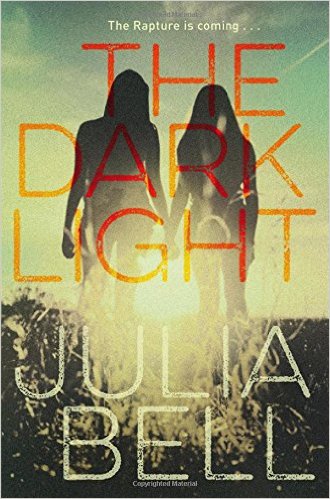
Cover Theme - Two Girls

Two recent releases, Ali Knight's The Silent Ones (Crime Fiction - June) and Julia Bell's The Dark Light (Young Adult - July) sharing the same image.


Friday, July 31, 2015

Review: The Zig Zag Girl by Elly Griffths

The Zig Zag Girl by Elly Griffiths, July 2015, 336 pages, Quercus, ISBN: 178429196X

Reviewed by Michelle Peckham.
(Read more of Michelle's reviews for Euro Crime here.)

In this first in a new series from Elly Griffiths, the setting is Brighton shortly after the war, and starts with the discovery of a murdered girl, cut up into three parts as it she had been in a magician’s trick cabinet and the trick had gone wrong. The detective investigating the case, DI Edgar Stephens, should know because he was once recruited to join a group of magicians in a special unit known as the Magic Men, during the war. The Magic Men were set the task of using their knowledge of trickery to try to deceive the enemy. While the unit didn’t last long, Edgar had made a few magician friends, and he knew he could contact one of them, Max, to find out his thoughts on the murdered girl. And fortunately, Max was working in a theatre not too far away.

The plot thickens when the murdered girl is finally identified, and it turns out that she had links with the magicians in the Magic Men. Slowly, more murders follow, each somehow linked to or involving other members of the group. Is the murderer specifically targeting former members of the group, and if so, why?

This is a gentle, entertaining read, with a lovely flavour of post-war Britain, the age of gentleman but with hints of the first few changes to come as old ways gradually fall away. Edgar is the perfect gentleman Detective Inspector, and Max Mephisto is a clever, sophisticated and good looking magician, still clinging to his life as a performing magician in the theatre, despite the signs that shows of this sort are slowly declining in popularity. And, there is the intriguing character of Ruby, who applies to be Max’s assistant, but really wants to be a magician. Who is she, what is her connection to events, and why does she apparently disappear into thin air. Slowly all is revealed in this wonderful mixture of magic, and detection rolled into one.

Michelle Peckham, July 2015

Thursday, July 30, 2015

Review: Tenacity by J S Law

Tenacity by J S Law, July 2015, 400 pages, Headline, ISBN: 1472227883

Reviewed by Ewa Sherman.

All my doubts whether I would want to spend some time aboard a nuclear submarine two-hundred metres below the ocean’s surface are gone now: the closeness of the boat company’s members (the ‘Old Man’ in charge booms that ‘crews’ are on ships); the ‘constant monotonous routine of sleep-wake-eat-work-eat-sleep’; cramped living and working conditions; no privacy; stale air pumped around the confined space; unexciting food; hierarchy and discipline; an atmosphere of camaraderie and very strict unchangeable rules; the ‘us and them’ division; artificial light; a place where disobedience is punished and brothers-in-arms bonds are indestructible; claustrophobia.

All the facts and characteristics of the place where you ‘dream about coffins’ before you descend into the belly of submarine HMS Tenacity, where Lieutenant Danielle Lewis, Dan for short, the best investigator in the Navy, embarks on a tough assignment.

Dan, recently re-assigned to the Special Investigation Branch’s KILL team, is shocked by the hostility she encounters during her investigation into the suicide of Stewart Walker who died on board of the submarine where he was serving. His wife Cheryl was brutally murdered just a day before his death and Dan also unofficially probes into the circumstances and possible connections between these two events.

No one wants to believe that foul play contributed to Walker’s suicide but the Royal Navy, albeit reluctantly, follow the protocol. Dan’s previous investigation hailed as both a spectacular success and a failure had caused irreparable psychological, physical and reputational damage. It’s told through flashback memories and then more tangible experiences as a new violent assault brings back painful recollections of a vicious attack connected to the investigation.

Dan, a lone wolf in her determination to see justice done, paranoid and anxious, trusts no one. Regardless of consequences, she ploughs through piles of paperwork, continues to interview reluctant and antagonistic submariners and intimidating officers, and refuses to give up and conform. To find answers she leaves no stones, or in this case heavy secret containers, unturned nor unlocked.
Gripping from the very beginning TENACITY is an uncompromising portrayal of working in the Navy, both on land and underwater, and the tensions that this kind of close relationship brings. It delivers a new take on solving crime in a formal yet aggressive environment and on being a woman in a tough place where everybody wants to undermine her professionalism. J S Law’s powerful writing style creates a perfect setting for the thriller where flawed yet strong heroine Lieutenant Dan Lewis fights for justice. This first instalment of a new crime series from debut author J S Law is absolutely brilliant. Cleverly constructed, dramatic and tense it leaves you feeling shocked yet wanting more. I can't wait for the second book.

Ewa Sherman, July 2015

Wednesday, July 29, 2015

Review: Lamentation by C J Sansom

Lamentation by C J Sansom, May 2015, 650 pages, Mantle, ISBN: 0230744206

Reviewed by Susan White.
(Read more of Susan's reviews for Euro Crime here.)

Henry VIII of England is coming to the end of his life, struggling with his weight and health and trying to leave a country that is secure for his only son and heir, eight-year-old Edward. It is a time of religious tension with many factions from reformers to traditionalists vying for his support and attention and also the chance to control the government under young Edward in due course.

Henry's sixth wife, Catherine Parr has written a book - Lamentations of a Sinner - concerning her personal thoughts about faith, which, she believes, is more involved with the study of the Bible rather than the ceremony of the Church. This belief was highly controversial and on advice from Archbishop Cranmer, she decides that the book must be destroyed as her thoughts could be construed as treason - especially by the King. However the book has disappeared and she turns to her old protegy, Matthew Shardlake, now Serjeant at the Court of Common Pleas, in the urgent and dangerous - but very secret mission - to find the book and return it to her.

As Shardlake follows the meagre clues, with his trusted colleague Jack Barak. they are taken into the hidden world of people whose thoughts are so radical that, if found, they would be burnt at the stake for heresy. He also has to tread the dangerous path of palace politics, a world he thought he had left far behind.

The politics of religion and religious freedom made living in the time of Henry VIII very frightening for both noble and commoner with the structures of faith and worship seeming to change almost daily. The author obviously knows the history of this time inside and out and is able to portray the excitement, the politics, the danger and the confusion of it very vividly. LAMENTATION is a must for readers of quality historical fiction.

This is the sixth in the series featuring Matthew Shardlake

Susan White, July 2015

Tuesday, July 28, 2015

Review: A Devil Under the Skin by Anya Lipska

A Devil Under the Skin by Anya Lipska, June 2015, 320 pages, The Friday Project, ISBN: 0008100357

Reviewed by Rich Westwood.
(Read more of Rich's reviews for Euro Crime here.)

This is the third in the Kizska and Kershaw series, set in London's Polish community, that began in 2013 with WHERE THE DEVIL CAN'T GO.

As the book opens, we have moved on more than a year since the events at the end of book two, DEATH CAN'T TAKE A JOKE.

Kasia, the long-time girlfriend of East London Polish 'fixer' Janusz Kiszka is about to move in with him, having finally decided to leave her useless husband Steve. Kiszka hopes that she is a hundred percent committed to her decision, but has lingering doubts...

Then Kasia fails to turn up. Kiszka visits her home to find that both Kasia and Steve have vanished, leaving one-way tickets to Alicante behind in their flat. He begins tracking them down, starting with Steve's dodgy acquaintances in the local pub. Soon Steve's friends begin dying in mysterious circumstances. As the dead Cockneys begin to pile up, Kiszka realises he needs to call in the police (even though the thought of officialdom makes him feel queasy).

Meanwhile Natalie Kershaw, now a firearms officer in the Met, has been cleared of any wrong-doing after fatally shooting a samurai-sword-wielding maniac outside a McDonald's in Leytonstone. But she still has to endure psychological evaluations before being allowed back on active duty. Has the stab-wound she endured in the last book made her trigger-happy?

Kershaw jumps at the chance to use her rusty detective skills to help out her old ally Kiszka. The hunt leads them from small-time crooks to big-time gangsters, and the investigation turns official, with Kiszka alternately working with Kershaw and hiding his own discoveries from her. Kiszka has some tough choices to make as he gets closer to Steve and Kasia.

An interesting subplot concerns Stefan Kasparek, an elderly hacker with some much-needed IT skills. Who knew that it was Polish codebreakers who first cracked the Enigma code?

A gritty story heightened by its depiction of the Polish community and some good jokes (as usual, Janusz's clownish friend Oskar provides laughs and loyal support to his old army friend).

As with most series, it probably pays to begin with the first book before it's too late, but this works fine as a standalone story. The inclusion of a little glossary and pronunciation guide at the back is much appreciated.

Rich Westwood, July 2015

Monday, July 27, 2015

Review: Tartan Noir by Len Wanner

Tartan Noir by Len Wanner, April 2015, 256 pages, Freight Books, ISBN: 1910449083

Reviewed by Amanda Gillies.
(Read more of Amanda's reviews for Euro Crime here.)

This book, which calls itself "the Definitive Guide to Scottish Crime Fiction", is simply wonderful. A beautiful, well-written assessment of what Tartan Noir actually is and how it came to be given that name. All too frequently Crime Fiction is described as not being 'proper' literature, that it is formulaic, simplistic and not worthy for consideration of things such as the Booker Prize. In complete contrast, therefore, what a delight to read an intellectual assessment of crime fiction that gives it, according to William McIlvanney, "deeper significance than is normally accorded".

TARTAN NOIR is divided into four chapters – each of which consider a different sub-genre of Scottish crime fiction; detective novels, police novels, serial killer novels and Noir novels. Each of these chapters thoroughly analyses its topic and includes an absorbing examination of ten different novels that fit within its remit. Throughout his writing, Wanner invites us to engage with what we are reading and to think about things for ourselves – which is one of the many excellent aspects of this highly-polished work that I love. TARTAN NOIR is so full of information that it must have been no small undertaking to produce and deserves to be widely known and read. At the end of the book you know exactly why Ian Rankin has become known as the King of Tartan Noir and why this isn't necessarily the truth. You will also have a very clear idea, maybe for the first time, of the distinctions between Tartan Noir and Scottish Noir, along with a whole heap of ideas of new books to read!

I loved every single page of this book and wholeheartedly recommend it to you. Don't skip bits! Read the whole thing! My favourite chapter was the final one. I was delighted to see an extended discussion of Allan Guthrie's "Slammer" – my all-time favourite book – and to finally have a name to put to the genre that I like best; Scottish Noir. TARTAN NOIR is a must-read for every fan of Scottish Crime Fiction. You will love it!

Extremely highly recommended.

Amanda Gillies, July 2015

Sunday, July 26, 2015

Molto Montalbano

Now Cordon is finished (I have the last 3 episodes to watch), its Saturday night slot - 9pm on BBC Four - will be taken by a repeat of series one of The Young Montalbano.


BTW, you can buy this t-shirt from the MHz Network store.


Book-wise we're being spoilt this year with the release of Game of Mirrors which came out in May, with the paperback out in August together with the hardback release of Blade of Light (US: A Beam of Light in September). Both translated by Stephen Sartarelli.

In February 2016, a collection of short stories will be released also, I believe, translated by Stephen Sartarelli: Montalbano's First Case and Other Stories. Montalbano's First Case is already available as an ebook from Mondadori (2013) translated by Gianluca Rizzo and Dominic Siracusa.

Here's the blurb for the short story collection:
This brilliant collection of short stories, personally chosen by Andera Camilleri, follow Inspector Montalbano from his very first case in Vigata, in which he stumbles upon a young girl lurking outside a courthouse with a pistol in her handbag. When she is taken in for questioning and won't utter a single word, Montalbano must find another way to learn who this mystery girl is trying to kill, and why . . .

Other cases include a missing woman who has run away from the love of her life; an old married couple who appear to be rehearsing their suicides; and a crime so dark there's only one person the inspector can call for help.

With twists and turns aplenty, these stories have all the the wit, mystery and culinary gusto that Camilleri's fans have come to love him for.

Thursday, July 23, 2015

Can't get enough of Reacher?

A few years ago I mentioned Diane Capri's series, the Hunt for Reacher in which the FBI try to track down Jack Reacher (the character created by Lee Child), well there's another series which might be of interest to Reacher's many fans, the Get Jack Reacher series by Scott Blade:


The series begins with Gone Forever which came out a few days ago. The blurb from amazon:

"I am the only Reacher--as far as I know." - Jack Reacher.
With special permission from #1 International Bestseller, Lee Child. 
In The Affair, Jack Reacher was sent into a small town to solve a crime. As usual, he snuffed out the bad guys and said goodbye to a beautiful woman. But this time Reacher left something behind--a son. Cameron Reacher. A new generation of Reacher. Cameron learns on his mother's deathbed that his father is a mysterious drifter named Jack Reacher. Jack Reacher is out there somewhere. In order to know his father; Cameron follows in his footsteps--literally. With one thumb out, he hits the road to track down Jack Reacher, but what he gets instead is a town with a deadly secret and a distraught husband fighting to find his missing wife. The need for justice drives Cameron. Like father, like son. (With a special preview of Winter Territory. Book 2 in the Get Jack Reacher Series)

Wednesday, July 22, 2015

Plot News: The Girl in the Spider's Web

Some details have been announced about the plot of The Girl in the Spider's Web which is being published on 27 August. From the press release:

THE GIRL IN THE SPIDER’S WEB
David Lagercrantz

A continuation of the series by Stieg Larsson
Translated from the Swedish by George Goulding

Published by MacLehose Press in hardback on 27 August 2015 at £19.99
Also available as an e-book

So far, with a global embargo in place, very few details of the much-anticipated return of Lisbeth Salander have been revealed.

Now MacLehose Press is releasing key details of the plot to whet the appetite of the 15 million readers in the U.K. who bought the trilogy.

She is the girl with the dragon tattoo: Lisbeth Salander,
uncompromising misfit, genius hacker.

He is the crusading journalist: Mikael Blomkvist,
dedicated to exposing corruption and abuse.

They have not been in touch for some time.

Then Blomkvist is contacted by renowned Swedish scientist Professor Balder. Warned that his life is in danger, but more concerned for his son’s well-being, Balder wants Millennium to publish his story – and it is a terrifying one. Säpo, Sweden’s security police, have offered him protection, but what Balder hopes for is to preserve his life’s work ‒ by going public.
More interesting to Blomkvist than Balder’s world-leading advances in Artificial Intelligence, is news that the professor had been working with a superhacker, a girl with a dragon tattoo.

Salander is busy with an agenda of her own. Using her old codename Wasp, she has been trying to hack into the American National Security Agency - a lunacy driven by vengeance, and fraught with every possible consequence.

Like Balder, she is a target of ruthless cyber gangsters who call themselves the Spiders. The violent unscrupulousness of this criminal conspiracy will very soon bring terror to the snowbound streets of Stockholm, to the Millennium team ‒ and to Blomkvist and Salander themselves. 

The adrenaline-charged, brilliantly intricate and utterly absorbing narrative of The Girl in the Spider’s Web is inspired by Stieg Larsson’s Millennium trilogy. The duo who thrilled millions of readers across the world are back.

Tuesday, July 21, 2015

Nordic Noir Night at Foyles


Last night at Foyles we were lucky to have Barry Forshaw interviewing Arnaldur Indridason and Hakan Nesser.

Here's a brief report based on my handwritten notes.

BF asks AI, what gender is Marion Briem?
AI: No idea. If I knew I wouldn't tell you! Difficult to write a genderless character and causes difficulty in French and German - translators must want to kill him. You are not supposed to know. Comes from a time when people were counting how many male characters, how many female characters in a book. Decided to have one you couldn't count.

BF asks HN where is the city of Mardam (where the Van Veeteren series is set).
HN: it is a fictitious country. It was intended to be a series. He didn't want to write about Stockholm as everyone did, so made the place up. HN came to Foyles in 1966 but couldn't afford to buy anything then. But later, through a relationship with an employee, was given a book from Foyles - Lady Chatterley's Lover (hint?). His girlfriend was not paid well so would liberate a couple of books a week. HN was going to return the book but it has been "stolen" again, from his bookcase.

AI wouldn't be tempted to live in the UK.
HN lived in London for 4 years and also lived in Winsford (see his latest book: The Living and the Dead in Winsford) for six months. A small cottage and rain for six months, it would be hard not to write a book in that time.

AI: Erlendur is 33 in Oblivion (his latest book in English, a prequel to the existing 11 book older Erlendur series), he hadn't intended to write prequels when he wrote the first Erlendur books.

HN: read Anne Holt's first book starring Hanne Wilhelmsen - a lesbian detective who rides a pink Harley-Davidson - couldn't top that so went with traditional detective. HN feels his work is mostly done in terms of books published and now the translations need to catch up.
[There are 5 Barbarotti books still to be translated but his long-standing translator Laurie Thompson died recently. Hope to get a new translator and get one into English soon.]

HN: Can't avoid the influence of Sjowall and Wahloo but you do need your historical glasses on when you read them.

AI: likes to include social realism like in the S & W's Martin Beck books. Ed McBain 87th Precinct books are slow - there's a murder but they carry on, could be bus drivers - still fascinating though.

HN: think we like reading Nordic Noir so we can see Sweden going the drain [compared to the perceived model society of before]. Quote: if you're not a socialist at 25 then you have no heart; if you are a socialist at 50 then you have no brain.

HN: readers from Germany and Sweden now go to visit Winsford. Pleased with the Van Veeteren tv series especially the first three which were 180 minutes long. The later ones were only 90.

AI: very happy with film, Jar City. AI has no idea where title Jar City came from. (was renamed Tainted Blood in pb edition).

Discussion about titles: much more important than you think eg HN had a book, working title Herman Goring, and had just 24 hours to come up with the finished title before it went to press. Couldn't sleep, finally came up with a title: the swallow, the cat, the rose and death, based on the rhythm of an Edgar Allan Poe poem. Also, UK title Hour of the Wolf, in Swedish is Carambole, a type of pool (table) game which was very appropriate.

HN: God has to prove he exits to Barbarotti over 5 books (was intended to be a quartet...)

In response to a question from Sarah Ward re the length of a series, AI said Sjowall & Wahloo made the rule of ten which is a good number though of course it can be broken eg McBain, who they also translated.

Swedish readers like the Winsford book - which is a recent book in Swedish too.
AI said that he wouldn't move Erlendur outside of Iceland - he can't imagine him on a plane.

HN writes in chronological order ie chapter 1, 2 etc.

Neither author reads much crime.

The first Icelandic thriller (?) was Desmond Bagley's Running Blind.

----

Do also see the tweets from Mrs Peabody.

Friday, July 17, 2015

Awards News: Theakstons Crime Novel of the Year 2015 - Winner

Not content with being the Euro Crime favourite read of 2014, Sarah Hilary has also won the (Harrogate) Theakstons Crime Novel of the Year 2015 for Someone Else's Skin.

Also shortlisted:
The Facts Of Life And Death by Belinda Bauer, Black Swan
The Axeman's Jazz by Ray Celestin, Mantle
The Outcast Dead by Elly Griffiths, Quercus
The Devil in the Marshalsea by Antonia Hodgson, Hodder & Stoughton
Entry Island by Peter May, Quercus
Read more at BBC News.

Wednesday, July 15, 2015

Review: Second Life by SJ Watson

Second Life by SJ Watson, February 2015, 432 pages, Doubleday, ISBN: 0857520199

Reviewed by Michelle Peckham.
(Read more of Michelle's reviews for Euro Crime here.)

Julia is a photographer, married to Hugh, a hospital consultant, and with a teenage son Connor. But Connor is actually her nephew, the son of her sister Kate, who had Connor when just 16, father unknown. When Kate couldn’t cope as a single mother, she asked Julia to look after Connor and what started as a temporary arrangement turned into a permanent adoption. But, the shocking news at the start of the story is that Kate, now living in Paris with a friend called Anna, has been murdered. The police seem to be unable to find out who did it or why.

Julia starts to become obsessed with finding out what she can, as a way of coming to terms with Anna’s death. She was particularly close to her younger sister, caring for her and helping to bring her up when their mother died. Anna gives Julia a box of Kate’s belongings and she finds the username and password to an online dating website, where she suspects that Kate met her murderer. Going behind her husband’s back, and not telling any of her friends, except Anna, she invents her own profile in the hope that whoever met (and possibly murdered) Kate, will gravitate to Julia.

Possibly part of the motivation behind Julia’s actions is that she is somewhat bored with her safe, middle class life, and is shocked out of her secure existence by the murder of her sister. Before she married Hugh, she had a rather wild existence, culminating in a move to Berlin just after the wall came down with her boyfriend Marcus, staying in squats and taking drugs. Something happened in Berlin that led to her precipitate departure, and subsequent marriage to Hugh, who somehow saved her. Perhaps she now wants subconsciously to overturn her quiet life and go back into something more exciting and potentially dangerous. Small steps lead to larger and larger ones, until Julia is in too deep. The secret life she has built for herself, using the excuse that she is trying to find out what happened to Kate, slowly turns on her until she is trapped, with no way out. Someone is exploiting Julia’s obsession to find out what happened to her sister, but why?

As with his first novel, BEFORE I GO TO SLEEP, SJ Watson again manages to draw a picture of a slowly building obsession, with a gradual racking up of the tension until the final dramatic ending. Perhaps a normal, sensible person might go online to try to find Kate’s boyfriends, but perhaps they might not take the next, more dangerous step, of meeting the possible murderer. Or go even further, as Julia does in this book. So, there has to be at least some suspension of disbelief, as the story progresses. But, Julia is not a sensible person. She is deranged by grief, and susceptible to manipulation and deceit. SECOND LIFE is a tense book, and just as good as Watson's first one.

Michelle Peckham, July 2015