Showing posts with label Stuart Neville. Show all posts

Sunday, July 12, 2015

New Reviews: Broadfoot, Goddard, Lovesey, Neville, Perry, Redondo, Russell, Ward, Williams

Here are nine reviews which have been added to the Euro Crime website today, five have appeared on the blog since last time, and four are completely new.

You can keep up to date with Euro Crime by following the blog and/or liking the Euro Crime Facebook page.

New Reviews


Amanda Gillies reviews Neil Broadfoot's The Storm, the sequel to the acclaimed Falling Fast;


Geoff Jones reviews the final part of the World Wide trilogy by Robert Goddard, The Ends of the Earth;

Terry Halligan reviews Peter Lovesey's Down Among the Dead Men, the fifteenth in the Peter Diamond series [and if anyone knows the title of the book he refers to in his review, do drop me a line/comment on the blog and I'll pass it on];

Lynn Harvey reviews Stuart Neville's Those We Left Behind in which DCI Serena Flanagan from The Final Silence, is promoted to main protagonist;

Michelle Peckham reviews Karen Perry's Only We Know, their (two authors co-writing) second psychological drama;


Laura Root reviews the CWA International Dagger short-listed The Invisible Guardian by Dolores Redondo tr. Isabelle Kaufeler;


After a four year absence, Jan Fabel is back in Craig Russell's The Ghosts of Altona, reviewed here by Ewa Sherman;


I review Sarah Ward's debut In Bitter Chill set in a chilly Derbyshire town

and Terry also reviews The Suicide Club by Andrew Williams, set during the First World War.


Forthcoming titles can be found by author or date or by category, along with releases by year.

Thursday, June 25, 2015

Review: Those We Left Behind by Stuart Neville

Those We Left Behind by Stuart Neville, June 2015, 368 pages, Harvill Secker, ISBN: 1846556961

Reviewed by Lynn Harvey.
(Read more of Lynn's reviews for Euro Crime here.)

Belfast, 2007
The two brothers huddle together on the bed, their hands bloodied. Ciaran asks his older brother Thomas if they are going to jail. Throughout the hammering and shouting at the front door and the sound of the approaching siren, Thomas's voice soothes Ciaran as they lie together.

Belfast, 2014
As soon as she sees the headlines screaming the release of the “schoolboy killer”, Probation Officer Paula Cunningham knows that the case will fall to her. Ciaran was imprisoned for murder at the age of twelve, his older brother Thomas released two years ago. Both boys' names have been released to the press. At nineteen, Ciaran Devine will have no idea how the outside world works.

Meanwhile DCI Serena Flanagan's first day back at work after her cancer treatment is one she has been dreading: the stares, the whispers, the pussy-footing. As she repositions the photos of her husband and two children on her desk, her boss enters with a file under his arm. Serena's heart sinks to find it is a clear-up job on the cases belonging to a retiring DCI but her boss reminds her that it is early days yet in her return to work. He pauses on the way out to pass on the message that the Devine boy's probation officer would like to speak to her.
Serena remembers Ciaran: a boy, a child. How she had gained his confidence but struggled with the facts when he confessed. And the letter that he had sent to her from prison. The letter that made her blush and that she had kept. Talking to Paula Cunningham, Serena also recalls the horrendous crime scene, the body of the boys' foster father in the corner of the master bedroom, the brothers lying on the bed. At the police station, Ciaran – thin, bearing the scars of self-harm – asked to see his brother. When she explained that he could not, she saw the panic in his eyes. He began to weep uncontrollably and she did what any mother would do and put her arms around the boy, comforting and rocking. Later, at the formal interview with a social worker observing, Ciaran made a full confession, stating that his older brother had tried to stop him but couldn't. Serena suspended the interview. She knew the brothers' stories would match....

Stuart Neville's latest book is signalled as the start of a new series featuring DCI Serena Flanagan. Serena first appeared in THE FINAL SILENCE – as one of DI Jack Lennon's adversaries. And I do hope we will read more Jack Lennon in the future. As with all “good” police protagonists, Serena has her own ambiguities not least the stubborn strength of her own feelings. (But where would we be without stubborn police detectives?) In THOSE WE LEFT BEHIND she not only struggles with her memories of Ciaran Devine and his shocking confession but with the double suicide of a friend and her husband. But she is not in charge of the suicide investigation and her subsequent “meddling” does not endear her to her boss. Character is something that Neville does very well and Paula Cunningham, the probation officer, convinces well – a hard-pressed worker who is perhaps close to burn out.

But the true chill of THOSE WE LEFT BEHIND lies in Neville's laying out of the Devine brothers' relationship with an empathic and devastating precision that had me flinching from what might yet come. Neville's work can be chilling but in this book he explores new territory. This is not the supernatural shiver that occasionally enters the “Jack Lennon” books. Nor the wintry brutality of old terrorists turned crime bosses. This is a full-on psychological ice, a dreadful, intimate study of two brothers, the youngest of whom confesses to a brutal killing as a twelve-year-old and whose release into a world as rushed and unforgiving as the one that nurtured the brothers spells disaster for those who cross their path. I have admired all of Neville's previous thrillers – including RATLINES, his departure into a political faction, thriller-land of 1960s Ireland as haven for fascist war criminals. But this latest book displays Neville's grasp of psychological suspense and reminds me of Scandinavian crime writers such as Mons Kallentoft, Karen Fossum and Henning Mankell. Don't let me muddy the waters of Northern Irish Crime writing however. Just read this book. And whilst it keeps you in fear and suspense – appreciate how beautifully it is written.

Lynn Harvey, June 2015

Sunday, August 17, 2014

New Reviews: Dunmore, Eriksson, Gibson, Gordon-Smith, Larsson, May, Neville, Simpson, Walker

Here are nine reviews which have been added to the Euro Crime website today, five have appeared on the blog since last time, and four are completely new. Interestingly, the settings of the books reviewed range from Canada to Venezuela.

NB. You can keep up to date with Euro Crime by following the blog and/or liking the Euro Crime Facebook page.

New Reviews


Terry Halligan reviews Helen Dunmore's The Lie writing that "it is not a book that will be forgotten very quickly";

Lynn Harvey reviews Kjell Eriksson's Black Lies, Red Blood tr. Paul Norlen which is the latest in the Ann Lindell series set in Uppsala;
Rich Westwood recommends Jasper Gibson's A Bright Moon for Fools set in an unvarnished Venezuela;

Terry also reviews Dolores Gordon-Smith's latest Jack Haldean mystery, set in the 1920s: After the Exhibition;

Michelle Peckham reviews the newest in Asa Larsson's Rebecka Martinsson series,  The Second Deadly Sin tr. Laurie Thompson, which is set in Northern Sweden;


Michelle also reviews Entry Island by Peter May which is now out in paperback;
Lynn also reviews Stuart Neville's The Final Silence, featuring DI Jack Lennon;


Geoff reviews Ian Simpson's  Murder on the Second Tee, set at St Andrews

and Amanda Gillies reviews Martin Walker's latest "Bruno, Chief of Police" mystery set in France: Children of War.


Previous reviews can be found in the review archive.

Forthcoming titles can be found by author or date or by category, here along with releases by year.

Thursday, August 14, 2014

Review: The Final Silence by Stuart Neville

The Final Silence by Stuart Neville, July 2014, 336 pages, Harvill Secker, ISBN: 1846556945

Reviewed by Lynn Harvey.
(Read more of Lynn's reviews for Euro Crime here.)

The water came to meet him, swallowed him, as tender as it was cold. A million images streaked through Raymond's mind, each one as bold and brilliant as the last, faces he'd known, many he hadn't, some of them twisted in terror...

Northern Ireland, Belfast - present day.
Raymond wants to die by the river, no hospital, no family and no one going into his house. He knows that there are things in there which he should destroy – but he can't. He locks the front door behind him and makes his way through the streets, his sick heart pounding and his breath short. At the pub on the towpath, one last drink, Black Bush. He savours it and leaves the pub as the cold sweat and the pain in his left arm strengthens. Not here. Further on, away from the people and buildings. Finally, with numbing fingers, he digs out his keys and throws them into the river before collapsing, falling towards the water's surface.
A few weeks later, Rea sits in the empty house with her dead uncle Raymond's few possessions in black bags, ready to be dumped. She hadn't seen him since she was a child, he seemed to spurn all contact with the family. Now he's gone, his body fished out of the Lagan where it had lain undiscovered for some time. Rea's father's first reaction was to call the solicitor, before even comforting his wife over the death of her brother. The solicitor said it was a matter of searching out any documents, bills and so on, before they can lay claim to the house. Rea's parents have decided that as soon legalities are sorted, the house will be hers. Rea has cleared the rooms with her mother but has found nothing. There is only the back bedroom left, its locked door proving stubborn against her father's shoulder. Rea sends her tired mother home and, taking stock, decides that she really wants the house and she will have that upstairs door open before the day ends. She finds a crowbar in the garage and returns upstairs. Working the bar into the door frame, pushing, slipping, falling, but battling on until, with a furious scream, attacking it with such force that she is driven backwards as a loud crack rings out. She falls, hitting her head and tasting blood. Recovering, she sees the room beyond the door – a dark cave. Within? A single light bulb and a desk whose only drawer contains a ledger, or is it an album? And within that book? Names, newspaper cuttings, hand-written entries, locks of hair and other dreadful mementos...

In THE FINAL SILENCE, Stuart Neville's fourth book in his DI Jack Lennon series, Jack himself is in a bad way. Suspended from the police force for shooting a fellow officer, still recovering from his own injuries, struggling to keep his young daughter out of the clutches of her dead mother's family – and with his old nemesis, DCI Hewitt of C3 Intelligence, still on his back. Rea Carlisle, an old girlfriend of Jack's, makes a macabre discovery in her dead uncle's house. Her politically ambitious father forbids her to go to the police, promising instead that he will deal with it, but Rea cannot rest easy. She calls in the only person she can think of to help her – Jack. Dragged into the mystery of the macabre find, Jack faces yet another police opponent in DI Serena Flanagan who seems determined to push him deeper onto the ropes.

Stuart Neville is an excellent writer whose books (the earlier three in this series and RATLINES, a politico/intelligence thriller set in the world of 1960s Ireland) are exciting and absorbing. I have been waiting anxiously for the latest Jack Lennon. I am not disappointed. On his website's blog, Neville has written about his struggles with writer's block both before and early on in its writing, so I am relieved that STOLEN SOULS, the previous DI Lennon, was not Lennon's own "final silence". Neville has found a way through the block to give us another story that builds suspense and pace without sacrificing depth of character. Human stories intertwine with ambition, deceit and the darker regions of the psyche. Jack Lennon is already more physically battered and scarred than Ian Rankin's "Rebus" but he too continues to slide down the greasy pole of his police career, notching up enemies with each lurching descent. Bad history and bad company contribute to his beleaguered state. Yet something within Lennon still urges him to play the “knight chivalrous” down streets filled with the bitter legacy of Northern Ireland's political struggles and factions. I am trusting that he will remain a force to be reckoned with – and I'm glad that both he and Neville are back.

Lynn Harvey, August 2014

Sunday, August 18, 2013

New Reviews: Casey, Delaney, Fitzgerald, Goddard, Hand, MacNeal, Neville, Oldfield, Wilton

This week's set of reviews, added to Euro Crime today, is a mixture of new reviews and a catch-up of those posted directly on the blog in the last few weeks, so you may have read some of them before if you're a regular :).

Also I've now set up a Euro Crime page on Facebook which you can like.

Michelle Peckham reviews Jane Casey's The Stranger You Know, the fourth in the DC Maeve Kerrigan series;

Amanda Gillies reviews Luke Delaney's debut, Cold Killing which is now out in paperback;


Lynn Harvey reviews Conor Fitzgerald's The Namesake, the third in the Commissario Alec Blume series;

Geoff Jones reviews Robert Goddard's The Ways of the World;
Lynn also reviews Elizabeth Hand's Generation Loss, the first in the Cass Neary series;

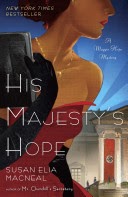
Terry Halligan reviews Susan Elia MacNeal's His Majesty's Hope, the third in the Maggie Hope series;

Terry also reviews Stuart Neville's Ratlines, which is now out in paperback;

Lynn also reviews Mark Oldfield's The Sentinel, the first part of the 'Vengeance of Memory trilogy'


and Rich Westwood reviews Robert Wilton's Traitor's Field, the second in the Tom Roscarrock series.

Previous reviews can be found in the review archive.

Forthcoming titles can be found by author or date or by category, here along with releases by year.

Sunday, February 17, 2013

New Reviews: Charlton, Connor, Lemaitre, Lipska, Muir, Neville, Runcie, Solana, Voss & Edwards


Nine new reviews have been added to Euro Crime this week:

Geoff Jones reviews Karen Charlton's The Missing Heiress, the first in the Detective Lavender series set in 1809;


Amanda Gillies reviews Alex Connor's Memory of Bones, which revolves around Goya's skull;

JF reviews Pierre Lemaitre's Alex, tr. Frank Wynne, concluding her review with: "An absolute gem of a crime novel that is wonderfully dark, scary, mad, bad and dangerous to know, but just far too good to miss...";


Michelle Peckham reviews Anya Lipska's debut, Where the Devil Can't Go which she very much enjoyed;

Laura Root reviews TF Muir's Tooth for a Tooth the third in the DI Gilchrist series set in St Andrews;


Lynn Harvey reviews Stuart Neville's Ratlines stating that it is "a convincing magnetic thriller";

Terry Halligan reviews the Father Brown-esque Sidney Chambers and the Shadow of Death by James Runcie;


I reviewed Teresa Solana's The Sound of One Hand Killing, tr. Peter Bush on the blog last week

and Rich Westwood reviews Louise Voss and Mark Edwards's All Fall Down, the second in the Kate Maddox series.


Previous reviews can be found in the review archive.

Forthcoming titles can be found by author or date or by category, here along with releases by year.

Tuesday, February 05, 2013

Cited on Stolen Souls

The paperback release of Stuart Neville's Stolen Souls is out on 14 February complete with a quote on the back from Lynn Harvey's review for Euro Crime (read it here):


Monday, July 23, 2012

Harrogate - The Golden Age?

My next panel was on Saturday morning about The (A?) Golden Age.

From the programme:

For many, the Golden Age of British crime fiction was the 1920s and 1930s, when writers such as Christie, Allingham, and Sayers were at their peaks. Others would argue that we are currently living through crime fiction’s true Golden Age and that contemporary writers are more than a match for the Golden Oldies. Banging the drum for the here and now are Stuart Neville and Robert Wilson, while Nicola Upson and David Roberts will be talking up the cosies. Chairman, Martyn Waites (aka Tania Carver) will do his best not to take sides.


My notes:
The Golden Age dead or is it now? Was it the Golden Age and what made it so?

NU crucial age of crime fiction was between wars as lots of writers working with set conventions. TGA established a genre of crime fiction with set rules that can then be broken.

DR hates that word cosy - demeaning and patronising. TGA started 1920 and died out in 1950s; there were some superb novelists eg Dorothy L Sayers, who despised own books; Agatha Christie was a good writer, Tey, Nicholas Blake - that's what makes it GA - very good writers and better than a lot today (ooh! -  controversy)

RW said after WW1, needing to set the world to rights. He reminded self of GA by reading Strong Poison (DLS); ruling classes wiped out the working class by bad decisions, but business as usual in novels. DR disagreed - upper classes suffered great losses too, first over the top life expectancy of two weeks for young officers. Rules about good and evil, which are not so clear in modern novels as "evil" is explained by social reasons. RW said that by the end of WW2 knew what is evil is : Hitler.

NU: direct correlation between WW! and GA but not due to class. Books show the importance of an individual life -  one life can matter against mass slaughter of war.

SN asks who's reading GA?

MW:  Christie villains often a foreigner or a member of working class. But DR said don't forget Poirot ia foreign refugee and that Miss Marple is part of a despised generation and a spinster. Upper classes can ask questions and and travel so as not restricted to a couple of villages like Midsommer Murders - so convenient  to have aristocratic sleuth, not just snobbery.

Character of today's crime fiction.

SN said not *the* GA,  several GAs eg Chandler, Hammet, Irish (though not sure that's true), Scandinavian.
 
SN writes about a sympathetic mass murderer. Sophisticated readership needed?

DR said there was too much violence in RWs books. The constant use of violence is like a drug, keeps needing to be increased.

MW said have moral responsibility to put violence in book as dealing with a violent death.

NU:  Tey made a distinction between legal and moral justice.

DR:  Harret Vane (in DLS) almost died,  not because of murder but because of not being married to the person she was living with.

MW: when read GA didn't recognise the England in it as he grew up in Newcastle.

Is it yearning for an England that didn't exist?

SN - all crime fiction is escapism. Amplified compared to real life and you get justice - also rare in real life.
RW - Scandinavian crime fiction popular as seen as ideal countries, now no-one want to go there!

MW - original titles of TGWTDT - Men who Hate Women - could be a title for any noir novel.

NU - Not all GA set in village eg Tiger in the Smoke by Allingham is set in London. Read Tey to see what it's like for women between the wars.

DR - why would you reread once you know the killer but AC still read in France, USA. How many books written today would people go back to? No cohesive school.

SN - there are movements rather than individual novels: tartan noir, Irish, Scandinavian.

GA definition excludes writers such as Patrick Hamilton.

Books read from that period do seem to be crime fiction rather than best sellers/classics (eg Huxley)

MW - nice if bit sooner didn't have to wait 50 years to be feted.

RW is term cosy patronising? Yes says DR.

AC is fondly remembered as bridge gap between child and adult reading.

MW suggests that cosy has mutated into forensic novel? eg Patricia Cornwell doesn't look at psychology behind it, less cake and more blood.

NU: best novels put character forefront.

DR would put P D James into GA. He hates violence and serial killers in modern stuff. Detective who is alcoholic, chip on shoulder and close family is investigated and they go and investigate - "word for it, self-indulgent comes to mind".

MW mentions Knox's The Decalogue, the ten rules for crime fiction reads out many of them eg must not include a Chinaman.

SN love writing from villain(s) pov, if couldn't write from that then couldn't write at all.

DR asks do you identify with killer? SN says evil doesn't know its own reflection. In their mind are doing the right thing. NU loves to write murder's pov as well. People like you and me not evil. Doesn't see self as writing GA novels as writing with modern sensibility re sex, violence set in the past. MW every one is a hero in their own story.

DR greatest proponent of this is Patricia Highsmith with Ripley - a modern GA writer, little violence but MW disagrees. There is violence but not modern torture.

RW re Thomas Harris - M Mann version of Lecter was evil, Anthony Hopkins version is a vaudeville character but more popular.

What have we gained/lost from GA?

SN it established a framework. Variety crime fiction can take. (leading onto phrase) transcends the genre - MW "twatish phrase that is!"

NU books we can enjoy, in bucket-loads. People return to Tey

DR more than just taking a sweetie - put aside Henry James and pick up Aggie with a guilty sigh.

Question from the audience:
Why do people keep creating defective humans?

MW - people like to read about damaged people and so feel better about self.

SN - deals with phsical rather than emotional damage in new book.

MW - happy is hard to write about. SN - Brian McGilloway does it well

DR - write about decent people not necessarily happy

NU  - most damaged person she's written about- Alfred Hitchcock. Day to day morality for Tey and DLS - they didn't always write abut murder

SH - defective detective - can work if genius eg Sherlock Holmes.

DR - loves P James books but wishes Grace would "only find his bloody wife" and then he could relax.

MW: any good novel should make you laugh/cry/think.

First GA was female, English writers and second one influenced by Americans.

Chandler and Wodehouse in same class at Dulwich. Imagine Marlowe & Wooster together!

Thursday, February 16, 2012

Publishing Deal - Stuart Neville

I received a press release last night from Harvill Secker regarding Stuart Neville, who has received glowing reviews from Euro Crime's reviewers:

Harvill Secker has acquired UK and Commonwealth rights for two new Jack Lennon novels by the Belfast crime writer Stuart Neville, in a deal with Caspian Dennis of Abner Stein. The two new novels are to be published January 2014 and January 2015 and will be a great asset to Harvill Secker’s prestigious crime list which features authors such as Jo Nesbo and Henning Mankell.

Stuart Neville’s debut The Twelve was published to critical acclaim in 2009 and went on to win the LA Times Book Prize in its category. Collusion and Stolen Souls have followed closely in its tracks, each garnering increasingly widespread praise.

In 2013 Harvill Secker will publish Ratlines, an exciting standalone thriller following the trail of Nazis in Ireland in the wake of World War II.

This will be followed by two newly acquired novels featuring Detective Inspector Jack Lennon, the protagonist of Stolen Souls, which has just been published to great acclaim. In the first of these new novels, Jack is struggling to keep his own life together but is dragged into a case of two brothers who, as children, committed a horrific murder and are now back on the streets. The second will feature a highly dangerous character from Jack’s past.

Sunday, January 01, 2012

New Reviews: Bauer, Benn, Hunt, Kallentoft, May, Neville & a New Competition

To introduce the New Year, a new competition and reviews of 6 books (5 of which are published on 5 January). There's a bit of a snowy-woods theme in terms of covers this week (see the Euro Crime homepage...)

Win Death of the Mantis by Michael Stanley (no geographical restrictions).

Here are this week's reviews:
Maxine Clarke reviews Belinda Bauer's Finders Keepers which continues the Exmoor setting of the previous two books;

Laura Root reviews Tom Benn's promising debut set in Manchester, The Doll Princess the first in the hero/anti-hero Bane series;

Irish author Arlene Hunt's latest book The Chosen is set in the US, and Terry Halligan describes it as an exciting read;

Michelle Peckham reviews the mass-market paperback release of Mons Kallentoft's Midwinter Sacrifice, tr. Neil Smith and Michelle thinks lead character Malin is a close relation to The Killing's Sarah Lund;

Amanda Gillies reviews Peter May's second part of his 'Lewis trilogy' The Lewis Man which stand equally well in its own right

and Lynn Harvey calls Stuart Neville's third book, Stolen Souls "a seriously good crime novel".
Previous reviews can be found in the review archive.

Forthcoming titles can be found by author or date or by category, here and new titles by Sara Blaedel, Andrea Camilleri, Conor Fitzgerald, Barry Grant, Colin Murray and Ruth Rendell have been added to these pages this week.

Sunday, November 27, 2011

New Reviews: Black, Campbell, Krajewski, Neville, Sjowall & Wahloo, Thomas

Here are this week's new reviews:
Mark Bailey reviews Truth Lies Bleeding the first in a new series by Scottish author, Tony Black;

Staying in Scotland, Amanda Gillies reviews Karen Campbell's Shadowplay and summarises her many words of praises in the phrase: "it rocks!";

Marek Krajewski's Mock series is a bit like Marmite, several of the Euro Crime review team have enjoyed it a lot, but Michelle Peckham had the opposite response when she read the latest, Phantoms of Breslau, tr. Danusia Stok, now out in paperback with a new look (though the older cover style may give the potential reader a better idea of the content! eg The End of the World in Breslau);

Lynn Harvey reviews Stuart Neville's Collusion now out in paperback and is the sequel to 'The Twelve';

Maxine Clarke reviews the tenth and final entry in the Martin Beck series by Sjowall and Wahloo The Terrorists, tr. Joan Tate which is as fresh as it was 36 years ago

and Terry Halligan reviews David Thomas's (aka Tom Cain) Blood Relative.
Previous reviews can be found in the review archive.

Forthcoming titles can be found by author or date or by category, here and new titles by Benjamin Black, Susanna Jones, M J McGrath, Hakan Nesser and Felix Palma have been added to these pages this week.

Sunday, October 09, 2011

New Reviews: Bayard, Cotterill, Durbridge, Hannah, McDermid, Neville, Ohlsson & New Competition

New Competition: Win a copy of Strangled in Paris by Claude Izner (UK only)

Here are this week's new reviews:
Amanda Gillies reviews Louis Bayard's The School of Night set in modern day, and Elizabethan England;

Lynn Harvey reviews Colin Cotterill's Killed at the Whim of a Hat which is now out in paperback and she makes an unexpected comparison with a well-known US series...;

I review the audio version of Francis Durbridge's Tim Frazer Again read by Anthony Head;

Susan White reviews Sophie Hannah's Lasting Damage which is now out in paperback, and which reminded her of Barbara Vine's earlier work;

Maxine Clarke reviews the new Tony Hill-Carol Jordan from Val McDermid, The Retribution;

Terry Halligan reviews Stuart Neville's debut, The Twelve aka The Ghosts of Belfast (US) which he thought was brilliant and original

and I also review the debut from Kristina Ohlsson: Unwanted, tr. Sarah Death which is gripping despite being a bit predictable.
Previous reviews can be found in the review archive.

Forthcoming titles can be found by author or date or by category, here and new titles by Declan Burke, Patrick Conrad, David Hodges, Arlene Hunt, Eva Joly & Judith Perrignon, J D Mallinson, Zygmunt Miloszewski, Harri Nykanen, Sam Ripley and Norman Russell have been added to these pages this week.

Wednesday, September 15, 2010

Collusion - Cover Opinions

This week's selection for "cover opinions" is the two covers for Stuart Neville's latest book: Collusion.

So what are you thoughts on the US (LHS) and UK (RHS) covers? Which would entice you to pick the book up if you were not familiar with Stuart Neville?

If you have read it, how does the cover match the story?

Here is the Euro Crime review, by Laura, of Collusion.

Sunday, August 22, 2010

New Reviews: Creed, Forrester, Franklin, Neville, Nickson, Sjowall & Wahloo

Two competitions for August and one is open internationally:
Win one of three sets of Lockdown and Deadlock by Sean Black (Worldwide)
Win one of five copies of Inspector Cataldo's Criminal Summer by Luigi Guicciardi, tr Iain Halliday (UK & Europe)

Here are this week's reviews, which this week include several historical novels:
I review Adam Creed's second outing for DI Staffe, Willing Flesh set in a seedy, modern-day London;

Terry Halligan goes back to the Elizabethan era for James Forrester's debut novel Sacred Treason;

Norman Price travels back to Henry II's time when he reviews Ariana Franklin's, fourth Adelia Aguilar outing, The Assassin's Prayer in which the leads traipse off to Sicily;

Back in modern-day, Laura Root reviews Collusion, Stuart Neville's follow-up to the very well-received The Twelve (apa The Ghosts of Belfast);

Michelle Peckham travels back to eighteenth century Leeds in The Broken Token by Chris Nickson

and Maxine Clarke reviews the penultimate title in the classic Martin Beck series by Sjowall and Wahloo, Cop Killer, tr. Thomas Teal.
Previous reviews can be found in the review archive and forthcoming titles can be found by author or date, here.

Sunday, July 26, 2009

New Reviews: Camilleri, Cross, Jungstedt, Liang, Neville, Thompson

It's the last week to enter the competition to win a copy of My Last Confession by Helen Fitzgerald (open to all).

Here are this week's reviews:
Maxine Clarke reviews August Heat by Andrea Camilleri, the tenth in the series and she thinks it may not be the best one to start with;

Craig Sisterson reviews the paperback edition of Burial by Neil Cross concluding that the author "does weave an engrossing tale that is well worth reading";

Amanda Brown reviews the paperback edition of Unspoken by Mari Jungstedt saying that it is "a very sinister and complex book";

Going a bit farther afield than normal, Laura Root reviews the paperback edition of Paper Butterfly by Diane Wei Liang, the second in this Beijing set PI series, calling it "a little gem of a book";

Mike Ripley reviews Stuart Neville's 'Northern Ireland noir' debut The Twelve stating that it is a "frighteningly assured first novel"

and Geoff Jones reviews the first in the Bella Wallis series, The Widow's Secret by Brian Thompson, set in the 19th Century.
Previous reviews can be found in the review archive and forthcoming titles can be found here.